


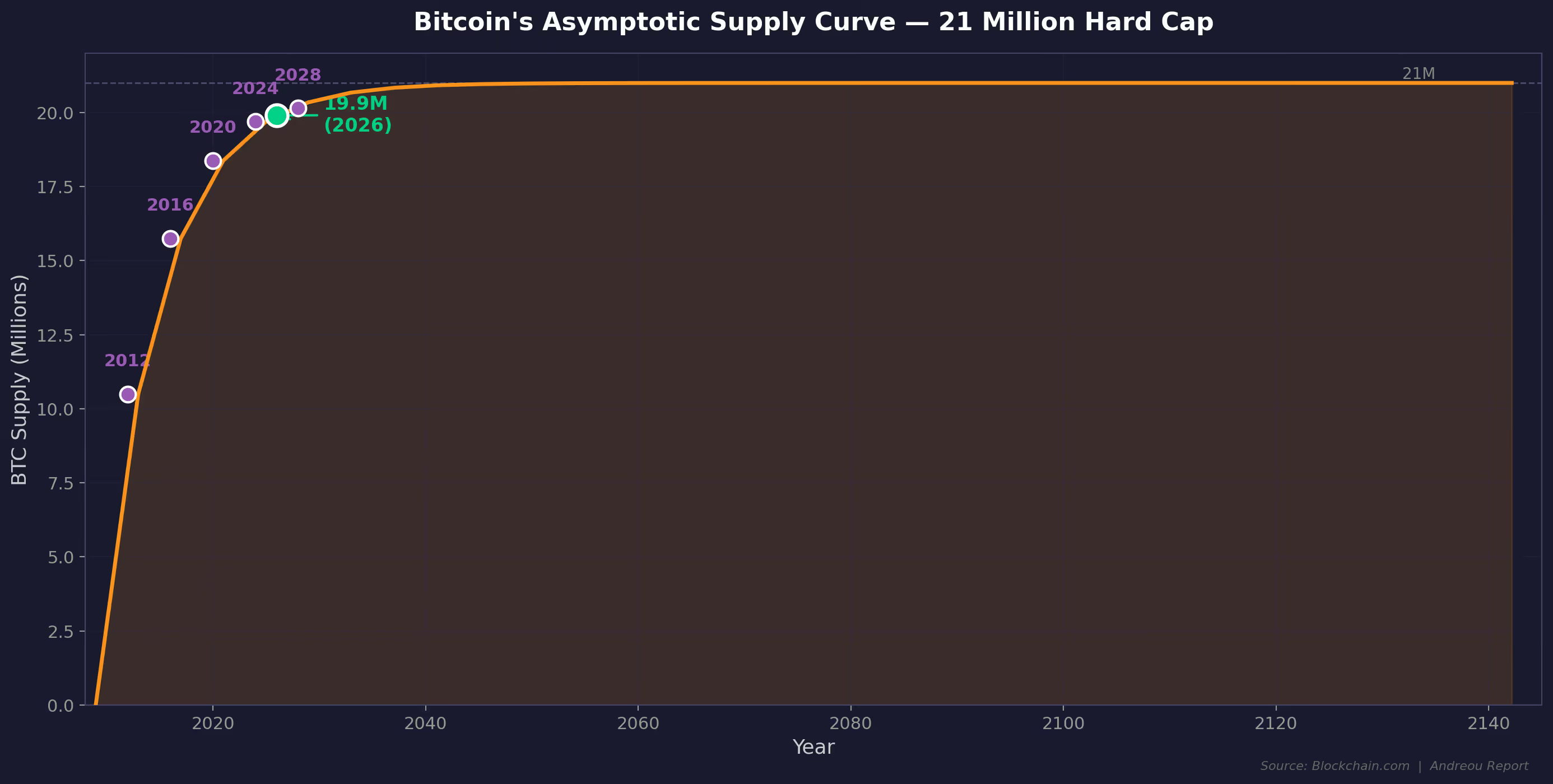
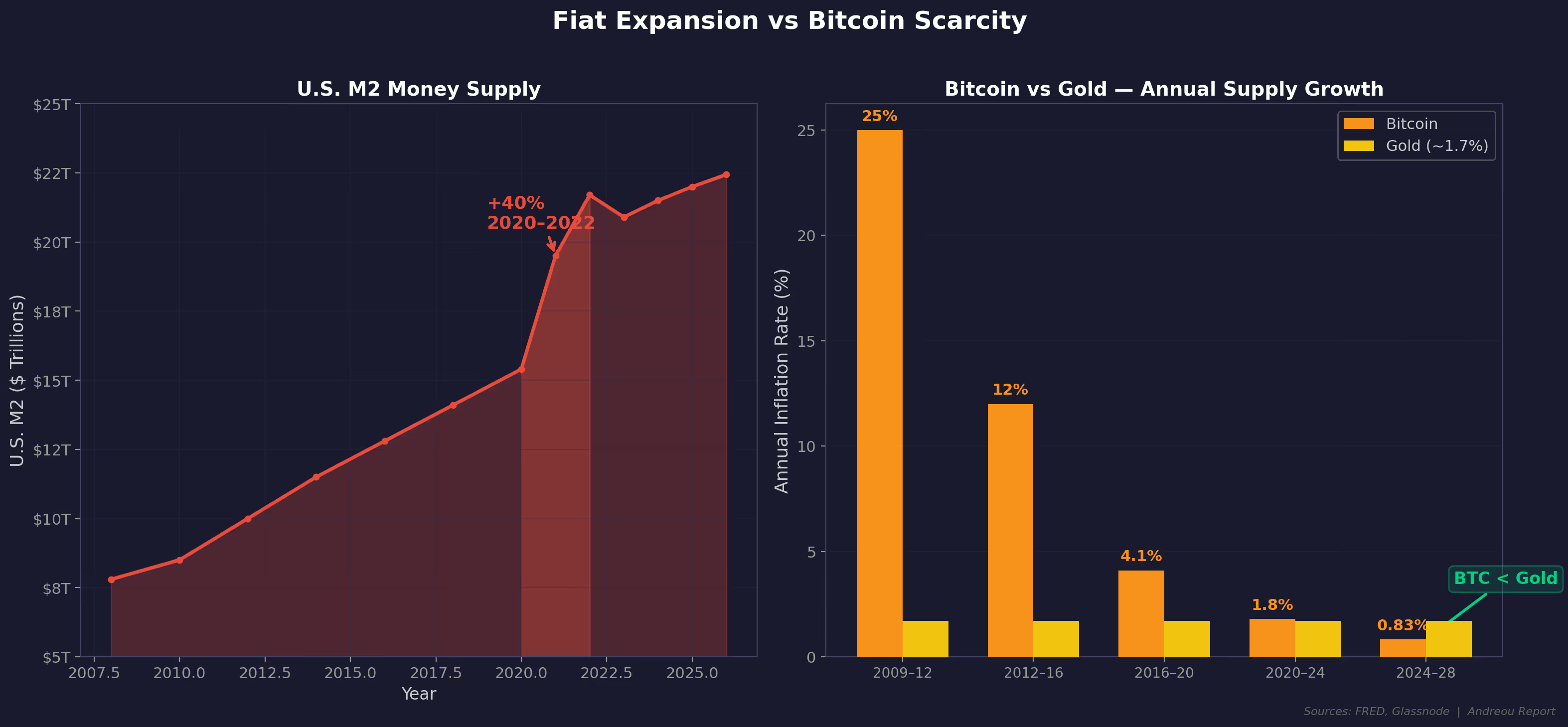
Of the 21 million bitcoin that will ever exist, roughly 19.9 million have already been mined as of early 2026—about 95% of total supply. Only 1.1 million remain, and the last fraction won't enter circulation until approximately 2140. The fixed supply cap is treated as Bitcoin's most defining property, the feature that separates it from every fiat currency on Earth. But the number itself was never derived from a deep mathematical formula. Satoshi Nakamoto, Bitcoin's pseudonymous creator, called the choice an "educated guess" in emails that surfaced during a 2024 London court case involving Craig Wright. That guess, paired with a halving schedule that cuts new issuance in half every four years, has produced something remarkable: a monetary policy with an annual inflation rate of just 0.83% following the April 2024 halving—lower than gold's estimated 1.5–2% annual supply growth for the first time in history.
What Satoshi's Emails Actually Reveal About the Number
The most direct evidence of Satoshi's reasoning comes from email correspondence with early Bitcoin contributor Martti Malmi, made public in February 2024. In those messages, Nakamoto wrote that his choice for the number of coins and distribution schedule was an "educated guess" and that it was "a difficult choice, because once the network is going it's locked in and we're stuck with it." A separate exchange with developer Mike Hearn, published by The Next Web, added context. Nakamoto explained he wanted Bitcoin's unit prices to eventually align with traditional currencies—envisioning a world where 0.001 BTC might equal 1 Euro—and settled on something in the middle.
The 21 million figure wasn't arbitrary, but it wasn't precisely calculated either. It falls out naturally from the parameters Satoshi chose for Bitcoin's reward schedule: an initial block reward of 50 BTC, halved every 210,000 blocks (roughly four years), with blocks produced approximately every 10 minutes. Run that geometric series to its mathematical limit, and the total supply converges to 20,999,999.9769 BTC—not a round 21 million, but close enough. The cap is really a byproduct of the issuance schedule rather than the other way around. Satoshi picked the reward structure first, and the number followed.
Four Halvings Have Compressed New Supply to a Trickle
The mechanism that enforces Bitcoin's scarcity is the halving—a hard-coded event that slashes the block reward by 50% every 210,000 blocks. Four halvings have occurred so far, each one cutting the rate of new bitcoin entering circulation. The first halving on November 28, 2012 dropped the block reward from 50 BTC to 25 BTC when Bitcoin traded at roughly $12. The second on July 9, 2016 reduced it to 12.5 BTC at around $650. The third on May 11, 2020 cut it to 6.25 BTC during COVID-era monetary expansion. The most recent on April 20, 2024 brought the reward down to 3.125 BTC per block, with Bitcoin near $64,968.
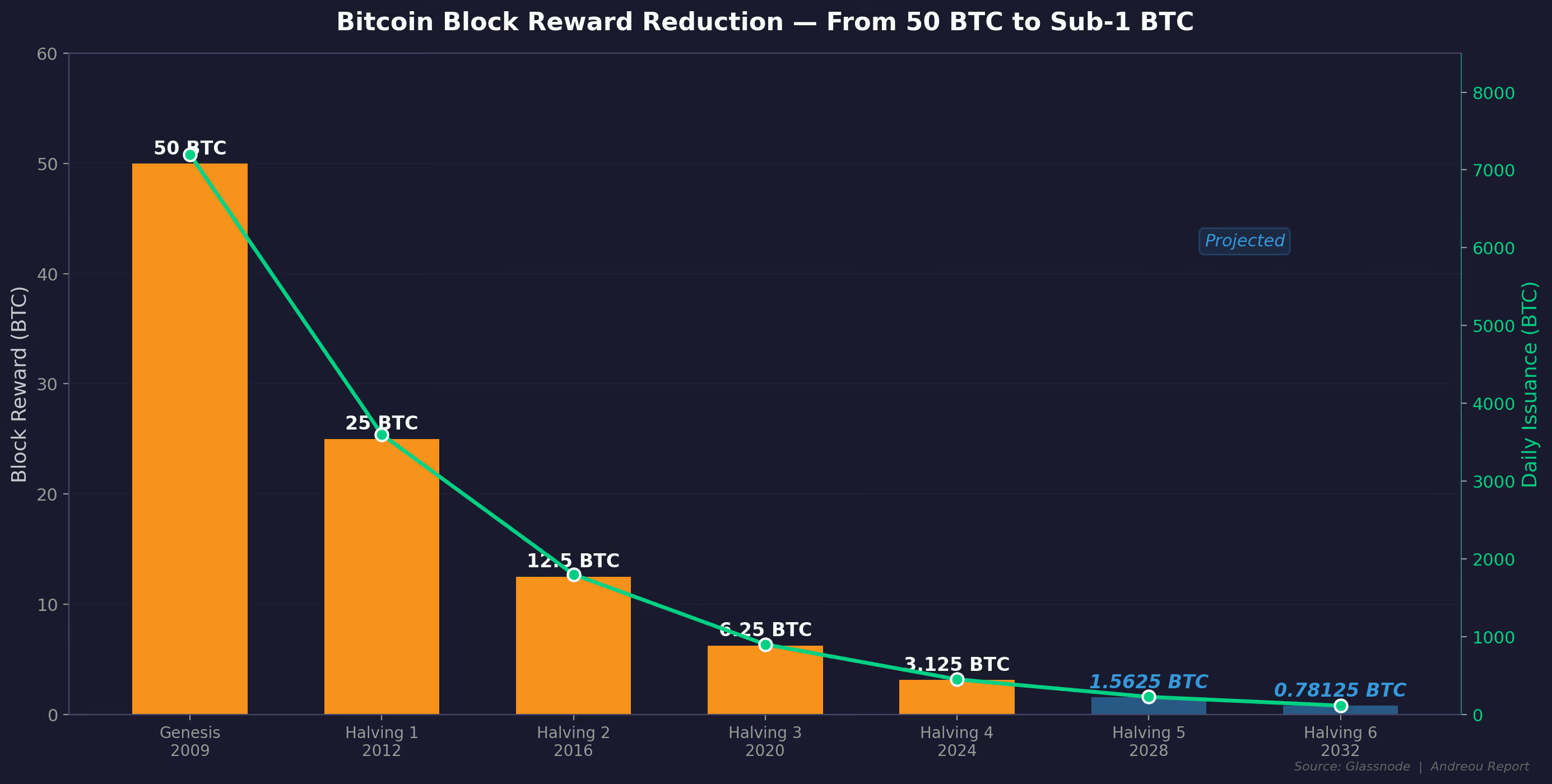
Today, miners add approximately 450 BTC per day to the circulating supply, or about 164,250 BTC per year. That translates to an annualized inflation rate of roughly 0.83%, based on the circulating supply of ~19.9 million BTC. The fifth halving is projected for approximately April 2028 at block height 1,050,000, which will reduce the block reward to 1.5625 BTC—dropping annual issuance to under 82,125 BTC per year. By the sixth halving around 2032, an estimated 98% of all Bitcoin will have been mined.
Fiat Expansion Makes the Contrast Sharper
Bitcoin's tightening supply stands in sharp contrast to fiat monetary systems. The U.S. M2 money supply hit a record $22.44 trillion in January 2026, growing at 4.3% year-over-year according to Federal Reserve data. Between January 2020 and early 2022, Federal Reserve quantitative easing pushed M2 from roughly $15.4 trillion to over $21.7 trillion—a 40% increase in two years. The Mises Institute noted that more than two-thirds of the current U.S. money supply has been created since 2008.
Bitcoin's protocol makes this kind of expansion structurally impossible. No central authority can alter the issuance schedule. The supply curve is written into open-source code that roughly 97% of Bitcoin nodes enforce, and any modification would require a Bitcoin Improvement Proposal, majority node consensus, and broad community support—a scenario widely considered functionally impossible given that scarcity is central to every holder's investment thesis.
The Software Caveat That Won't Go Away
Skeptics rightly point out that the 21 million cap exists in software, not physics. In December 2024, BlackRock included a disclaimer in a Bitcoin explainer video stating that there are no guarantees Bitcoin's maximum supply won't change. Technically, that's true—Bitcoin is open-source code, and a developer could submit a proposal to modify the cap. But the governance hurdles make this practically unachievable: thousands of decentralized node operators would need to upgrade to rules that directly dilute their own holdings.
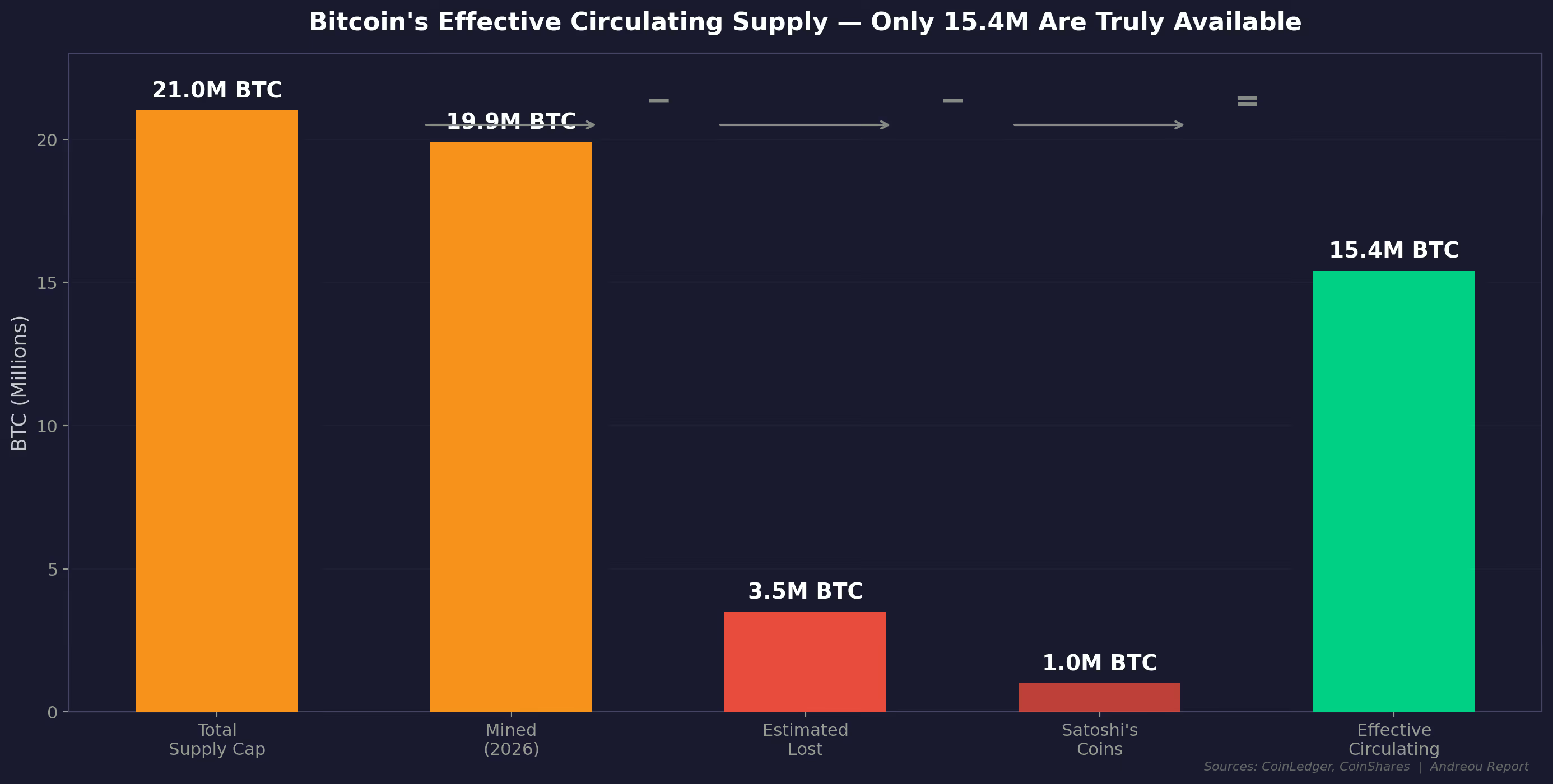
There's also the question of effective supply versus theoretical supply. CoinLedger's August 2025 research estimates that between 3 and 3.7 million BTC are permanently lost—stuck in wallets with forgotten private keys, destroyed hardware, or inaccessible early addresses. That includes Satoshi Nakamoto's own stash of nearly 1 million BTC, untouched since mining ceased around 2010. The CoinShares analysis argues the effective hard cap is closer to 18.5 million BTC when accounting for lost coins—making Bitcoin even scarcer than the protocol suggests on paper.
A Bet on Code Over Institutions
Satoshi Nakamoto designed a system where monetary policy runs on math instead of meetings. The 21 million cap, born from a self-described guess about global currency pricing, has evolved into the most predictable supply schedule of any widely held asset. Post-2024 halving, Bitcoin's annual issuance rate of 0.83% sits below gold's roughly 1.5–2% annual supply expansion and far below the growth rates of major fiat money supplies. Whether that translates into sustainable value storage or merely creates an artificial scarcity premium remains the open question for the next decade—but the supply mechanics themselves are settled code, verifiable by anyone with a node and an internet connection.


.png)