


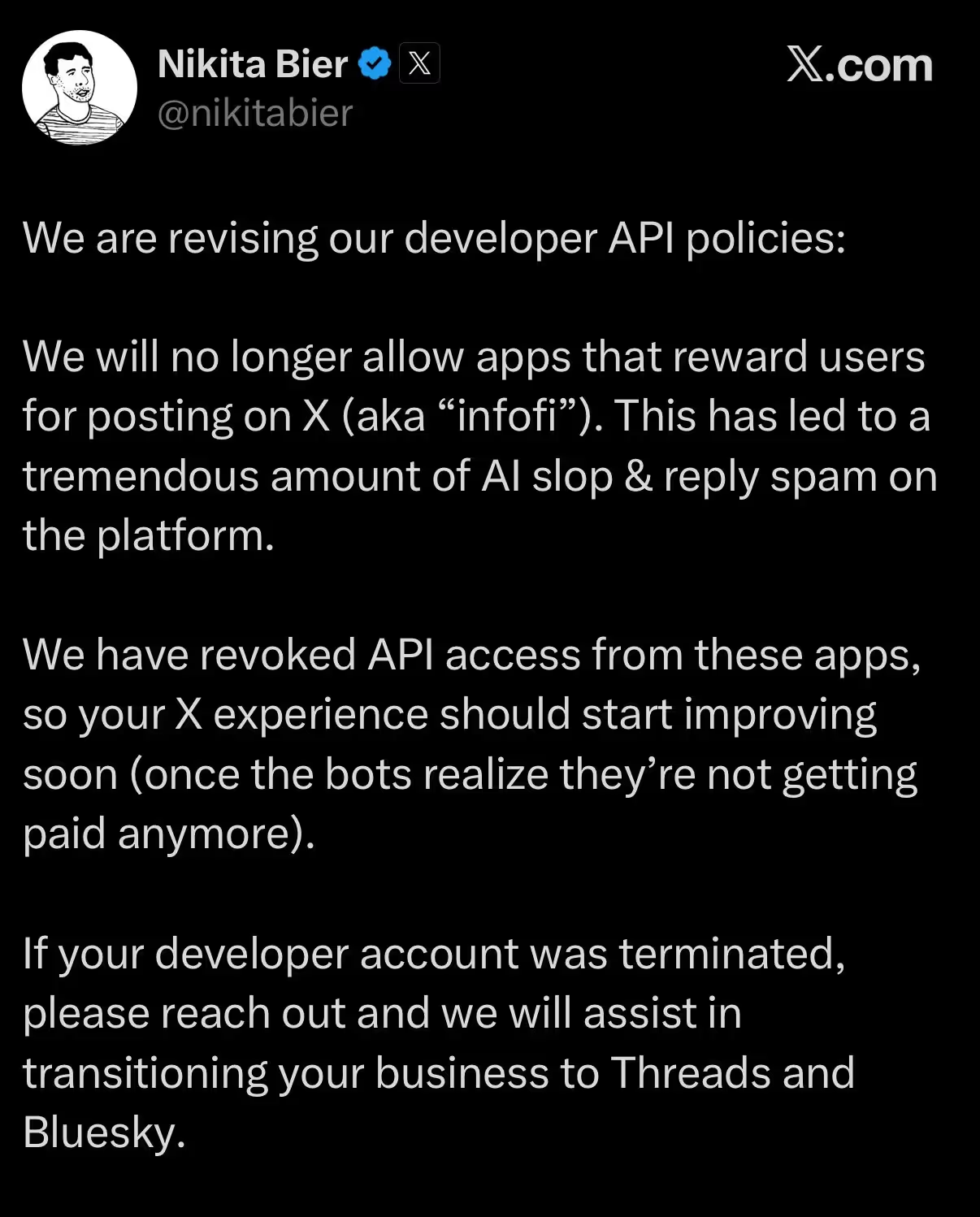
X just declared war on an entire crypto sector. On January 15, 2026, the platform's head of product Nikita Bier announced that X would no longer allow applications that reward users for posting. The decision immediately revoked API access for so-called InfoFi projects, a category of crypto platforms that tokenize user attention and engagement. Within hours, tokens across the sector crashed double digits while projects scrambled to pivot their entire business models.
The announcement was blunt. Bier stated that InfoFi apps had led to "a tremendous amount of AI slop and reply spam on the platform" according to Decrypt. The platform revoked API access immediately rather than phasing out the policy, leaving projects with no transition period. When asked whether InfoFi platforms could pay to maintain access, Bier responded that they were already paying millions for Enterprise API access and X did not want the money.
The Market Carnage Was Immediate
KAITO, the most prominent InfoFi token, dropped 20% within hours of the announcement according to CoinJournal. The token fell from around $0.70 to $0.54, approaching its all-time low of $0.47 recorded in December.
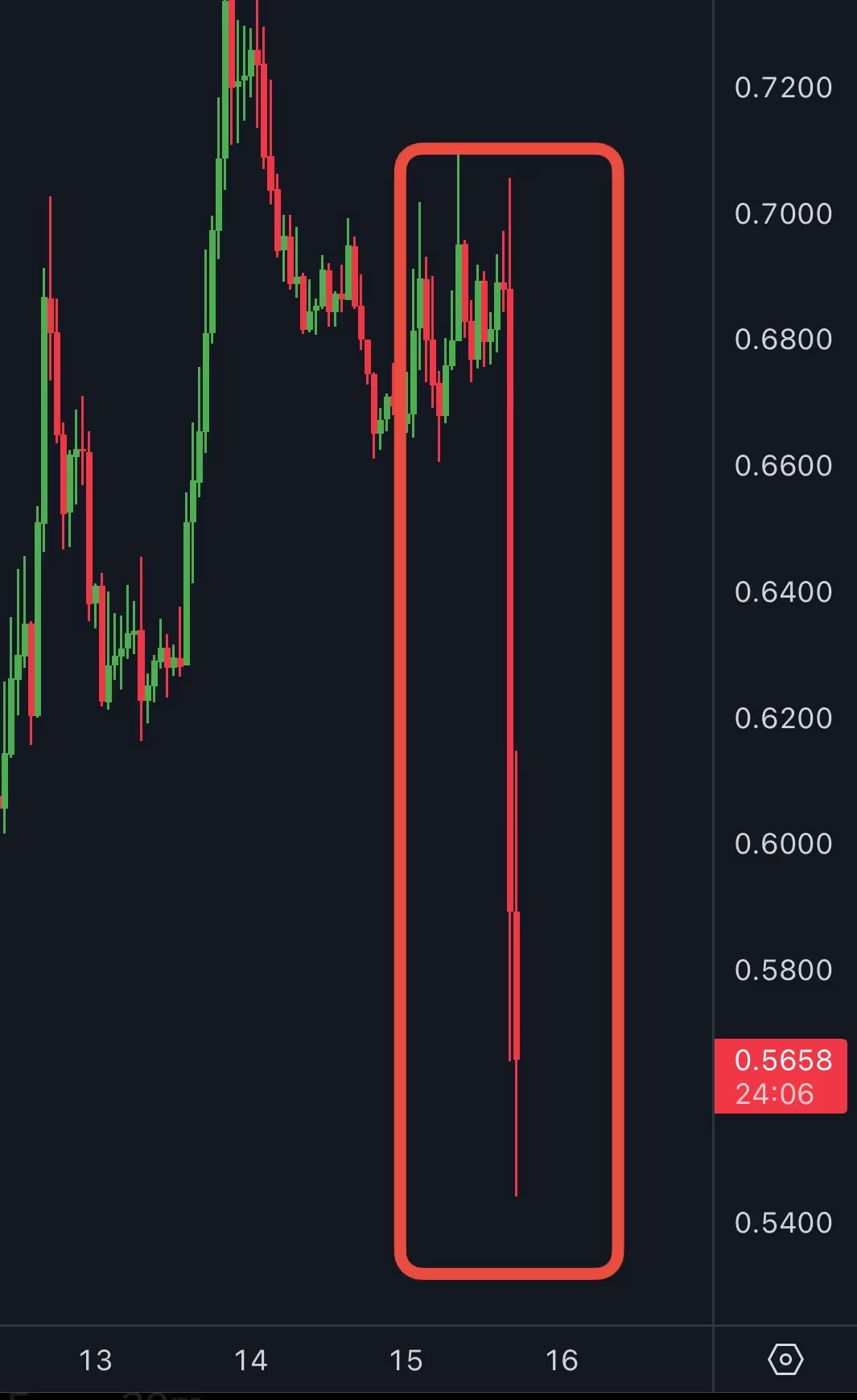
Trading volume surged to over $153 million in 24 hours, more than the project's entire market capitalization turnover, signaling conviction-driven selling rather than temporary volatility.
Other InfoFi tokens followed. Cookie DAO and Loud each fell approximately 11% in the same period according to Decrypt. The broader InfoFi sector, valued at roughly $367 million before the announcement, dropped more than 10% according to AMBCrypto. Some exchanges temporarily paused deposits and withdrawals for affected tokens due to the volatility.
Kaito Forced to Kill Its Core Product
Kaito founder Yu Hu responded by announcing the immediate shutdown of the platform's Yaps product, which had been the primary driver of user engagement and token utility according to Coinpedia. Yaps rewarded users with KAITO tokens for creating and interacting with crypto-related posts on X. Industry estimates suggest the program accounted for roughly 70% of KAITO's practical token utility according to CoinJournal.
The shutdown affected approximately 157,000 accounts in the Kaito Yappers community according to Coinspeaker. Korea represented Kaito's largest market by user base, and these users lost their primary mechanism for earning tokens overnight.
Yu Hu acknowledged the decision followed direct discussions with X and admitted that a fully permissionless distribution system was no longer viable. The company announced a pivot to Kaito Studio, a tier-based marketing platform focused on curated brand and creator partnerships that will expand beyond X to YouTube and TikTok.
The Spam Problem That Triggered the Ban
The scale of bot activity on X provides context for the ban. CryptoQuant CEO Ki Young Ju reported that bots generated 7.75 million crypto-related posts on January 9 alone, representing a 1,224% spike attributed to InfoFi reward systems according to Coinspeaker. The InfoFi model, which rewards users for engagement regardless of content quality, had created a perverse incentive to flood the platform with automated content.
Blockchain investigator ZachXBT, who had previously accused Kaito of inflating user metrics in August, praised the decision according to Decrypt. He described the inorganic activity and fake metrics as obvious to anyone with common sense and noted they had made X borderline unusable for everyone else.
The ban also follows controversy over crypto users' repetitive posting of "gm" (good morning), pandemic-era slang that became a mechanism for farming engagement rewards. Bier had argued in a since-deleted post that Crypto Twitter was dying from suicide rather than the algorithm.
The Counterargument: Creators Lose a Revenue Stream
Not everyone celebrated the decision. Web3 Collective founder David Choukroun pushed back, arguing that X does not pay creators anywhere close to other platforms according to TheStreet. Creators like him used InfoFi as a legitimate revenue source. Choukroun emphasized that not all users were bots and urged Bier to reconsider.
The criticism has merit. X's creator monetization remains limited compared to platforms like YouTube or TikTok. InfoFi filled a gap by letting crypto-native creators earn from their engagement. The ban eliminates that option without providing an alternative, potentially pushing crypto discussions to competing platforms like Threads or Bluesky. Bier even offered to help affected developers transition their businesses to those competitors.
Some users also questioned whether the move would simply concentrate rewards among a smaller group of curated creators under the new Kaito Studio model, limiting fair access for independent participants.
What This Means for Platform Risk in Web3
The InfoFi collapse illustrates a fundamental vulnerability in Web3: building decentralized token economies on centralized platforms is inherently fragile. X can revoke API access overnight, and projects have no recourse. The policy did not come with advance warning or a wind-down period.
Survival now depends on pivoting away from X entirely. Projects must find new ways to verify value and engagement outside X's infrastructure or migrate to decentralized social protocols according to CryptoRank. The original model of farming rewards for tweets is dead.
For investors, the lesson is straightforward: token utility tied to a single platform's API represents concentrated risk. When that platform changes policy, utility can evaporate overnight, and prices follow. The InfoFi sector learned this the hard way.


.png)